Two generations of master woodcarvers. One unbroken tradition.
Some people inherit land. Others inherit money. We inherited a chisel rack, a green bandsaw, and fifty years of sawdust ground into the floor.
Where It Started
Late 1960s, Athens. Stratos Parmachtsoglou was a teenager when he started working under Dominikos, a woodcarver who supplied half the furniture workshops in Attica. No formal school — just show up early, watch, and don't ruin the wood. Stratos spent years on the simplest tasks before he was trusted with a carving chisel. That patience became the foundation of everything that followed.
The Tools
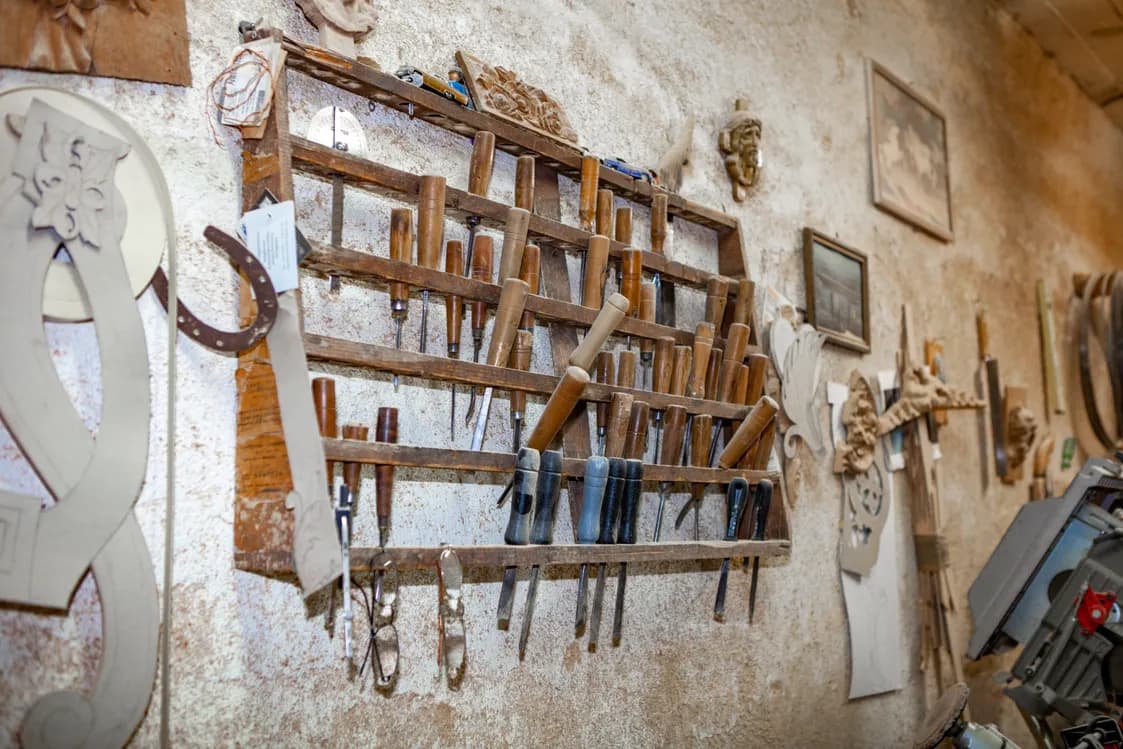
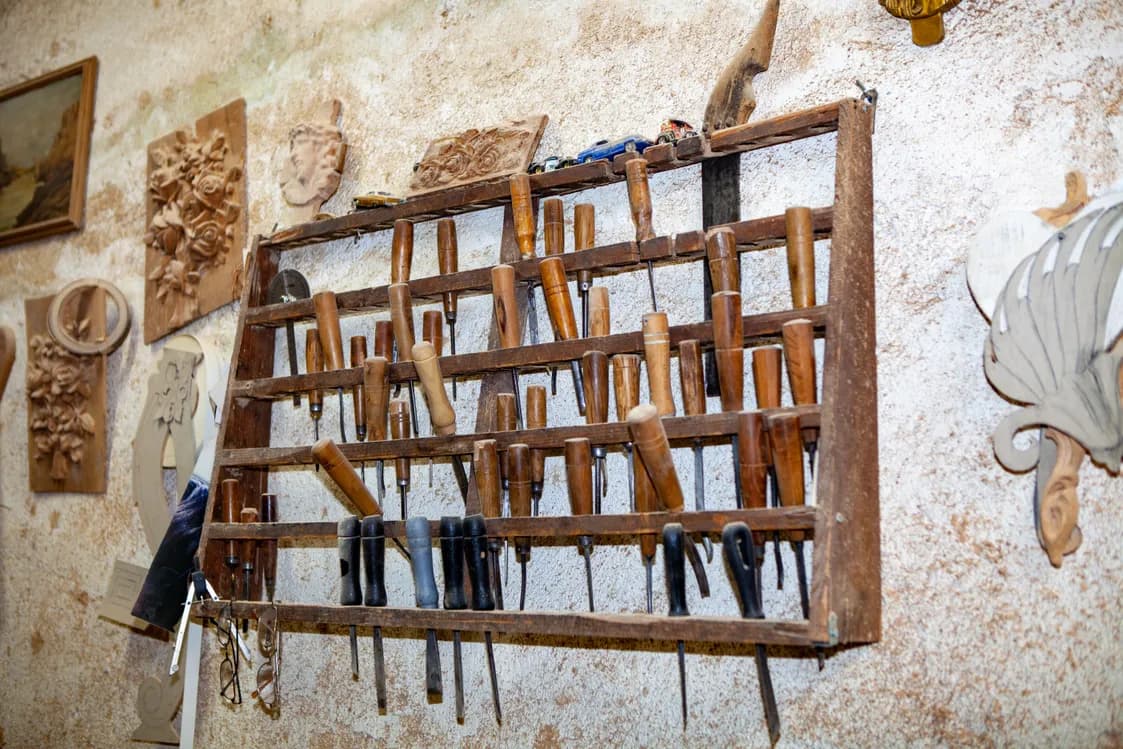
Walk into the workshop and the first thing you notice is the chisel rack. Dozens of gouges and chisels, organized the same way Dominikos arranged his. Stratos never changed the order. Next to the rack: a horseshoe for luck, a few carved samples pinned to the wall, and pencil sketches on yellowed paper. Nothing here is decorative. Everything gets used.
Fifty Years of Work
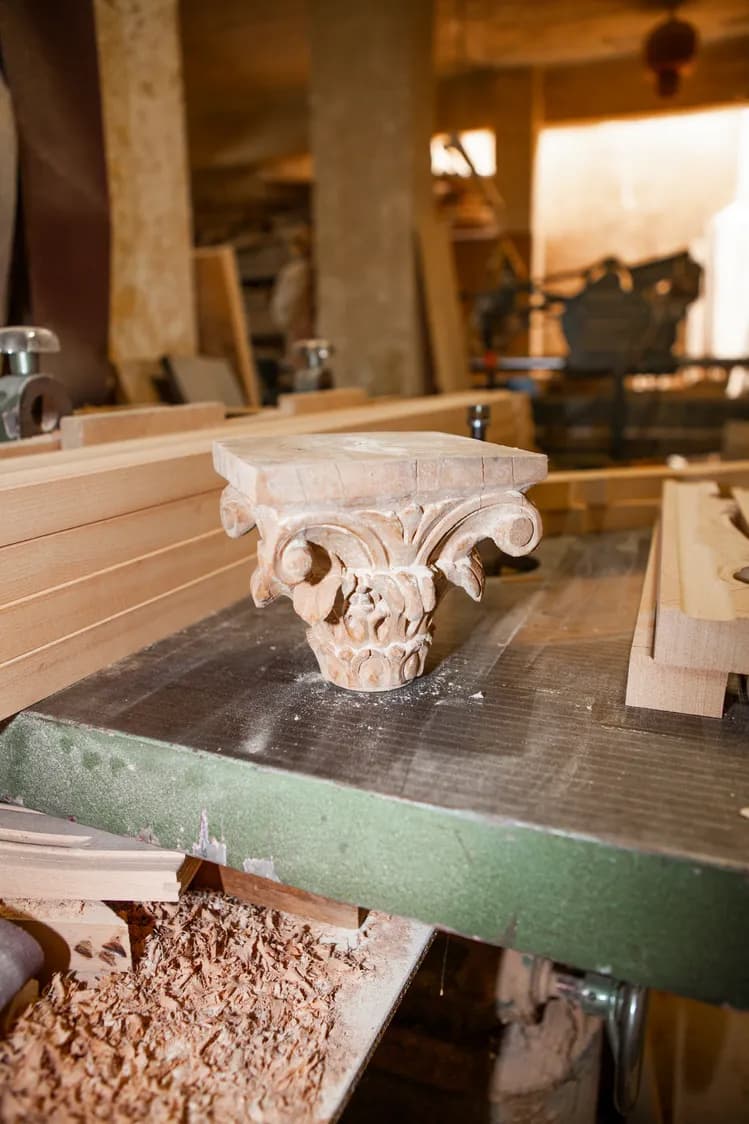
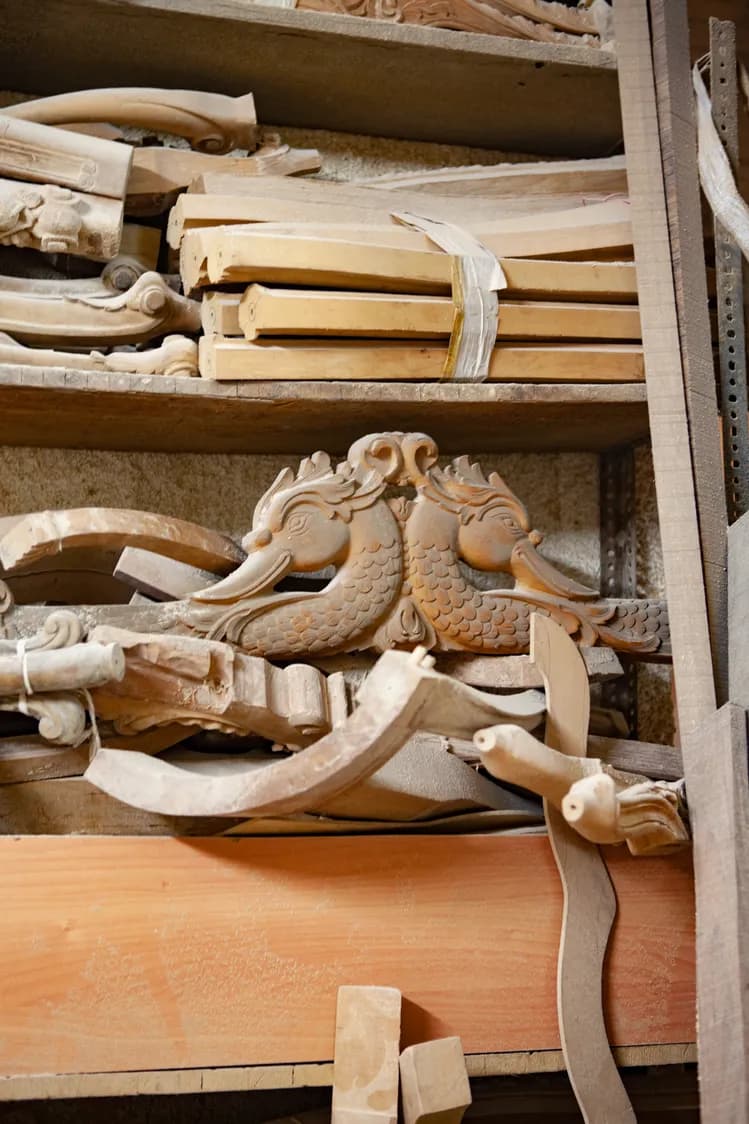
Corinthian capitals for neoclassical buildings. Acanthus scrollwork for church iconostases. Furniture legs, mirror frames, dolphins, and hundreds of carved spoon blanks stacked in boxes. The shelves hold decades of patterns and molds — some Stratos designed himself, others passed down from Dominikos. He never stopped taking commissions. Even the quiet years had work, because people who know real carving always come back.
Father and Son
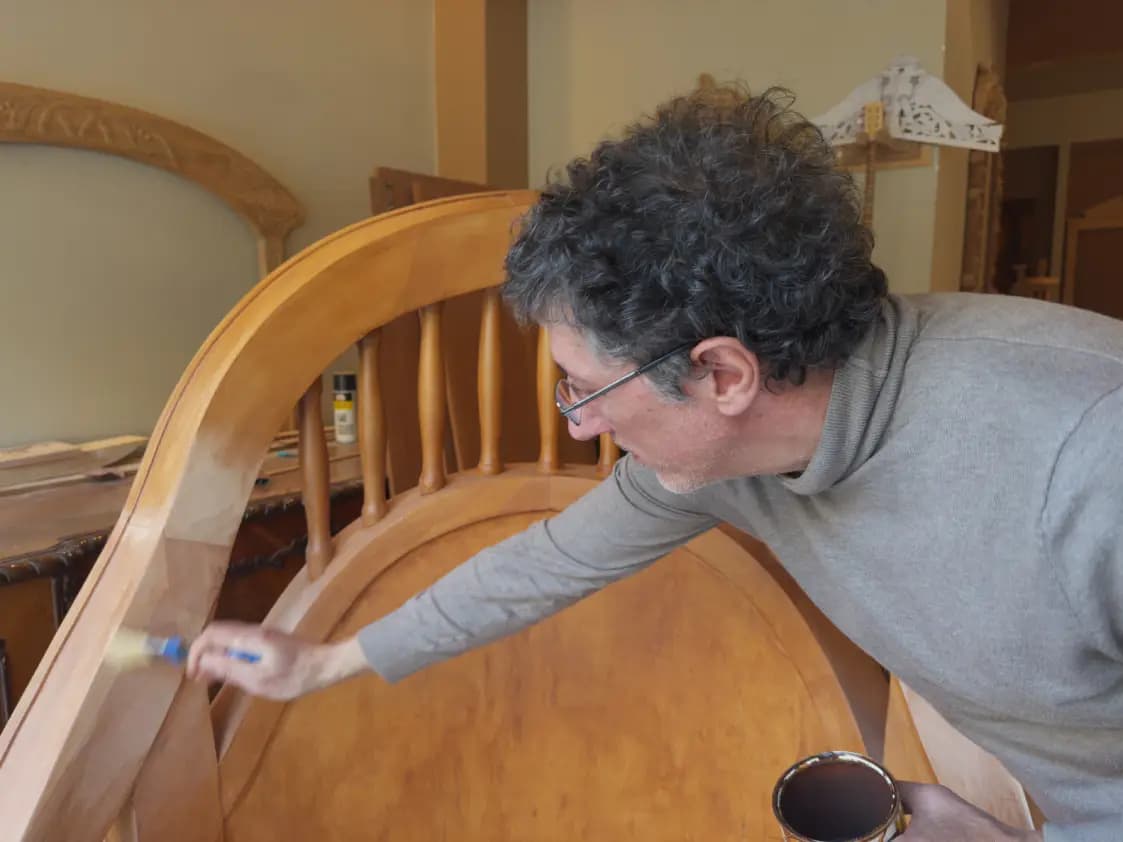
Stavros grew up in this workshop. He learned to use the bandsaw before he learned to ride a bike. His father didn't give lessons — you learned by being there, by watching, by making mistakes on scrap pieces. By his twenties, Stavros was running his own commissions. He kept his father's standards: if the grain fights you, pick different wood. If the joint shows, do it again. No shortcuts.
Still Here
Stratos is retired now, officially. But most mornings you'll find him in the workshop anyway, sorting wood or sharpening a gouge. He says he doesn't work anymore. His hands disagree. Stavros runs the business today — same workshop, same tools, same standards. New clients, new designs, but the same commitment: everything by hand, everything built to last longer than the person who ordered it.
What We Stand For
Generational Mastery
Techniques passed from master to apprentice, refined over half a century of daily practice
Uncompromising Standards
We use only the finest hardwoods and never cut corners — every piece is built to outlast its maker
Heritage Preserved
Keeping alive the art of European hand carving in an age of mass production
Continue the Story With Us
Every commission adds a new chapter to our family's craft. Let's write yours together.
Contact Us